Process Improvement Is Quietly Shaping Your Entire Day
Most people don’t notice it… but process improvement is quietly shaping your entire day.
Most people don’t notice it… but process improvement is quietly shaping your entire day.
From how fast your coffee is served, to how smoothly your package arrives, to how long you wait on hold, there’s an invisible system behind it all. And that system is constantly being refined.
We live in a world of processes.
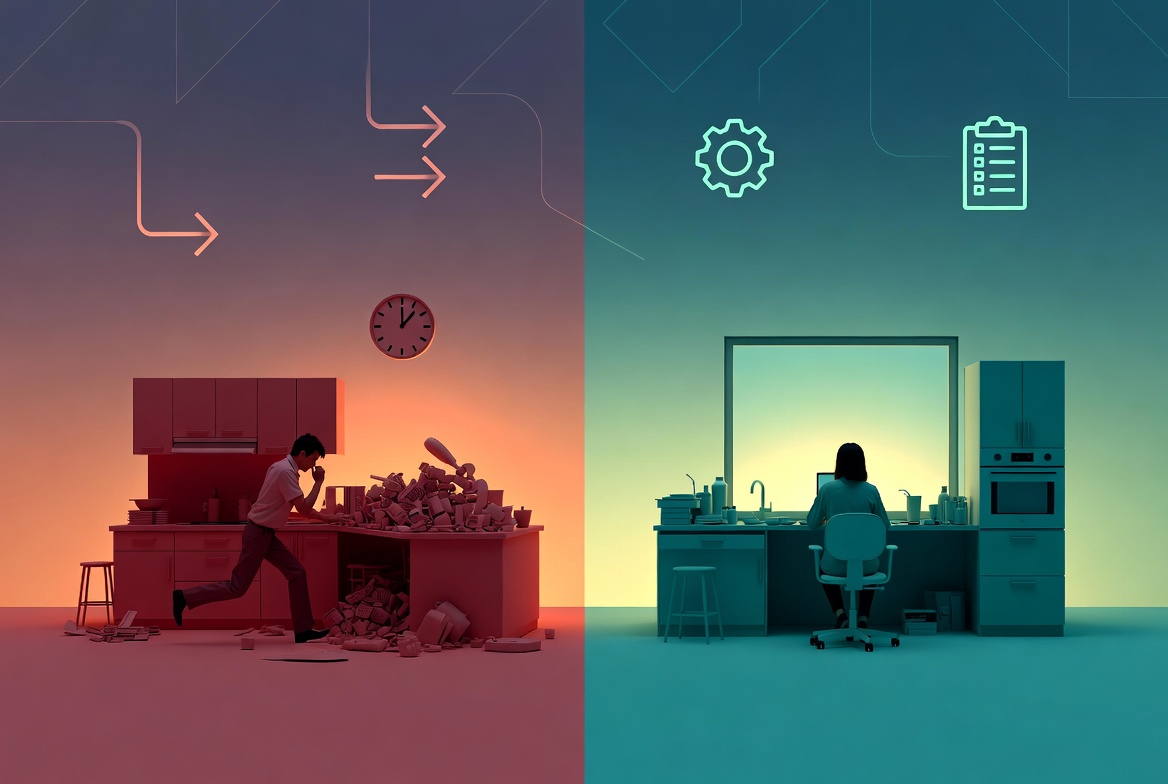
Every click, every delivery, every service interaction follows a sequence of steps. Some are seamless. Others… not so much. The difference between frustration and satisfaction often comes down to how well those processes are designed.
This is where Lean Six Sigma comes in.
At its core, it’s not about complicated tools or corporate jargon. It’s about asking simple, powerful questions:
Why does this take so long?
Where are mistakes happening?
What steps don’t actually add value?
How can we make this easier for the end user?
It’s a mindset focused on clarity.
Lean thinking challenges us to remove what doesn’t matter, waste, delays, unnecessary complexity. Six Sigma complements that by reducing variation, making outcomes more predictable and reliable. Together, they create something powerful: consistency with efficiency.
But here’s the interesting part…
You don’t have to work in manufacturing or analytics to see its impact.
Think about:
A hospital reducing patient waiting times
An app becoming more intuitive with fewer clicks
A company delivering orders faster and more accurately
A team spending less time fixing errors and more time creating value
That’s process improvement in action.
When it’s done well, it becomes invisible. You don’t notice the system, you just notice that things work better.
And in a world where time, attention, and experience matter more than ever, that “invisible improvement” becomes a real competitive advantage.
Because ultimately, Lean Six Sigma isn’t just about improving processes.
It’s about improving experiences.
For customers. For employees. For everyone interacting with the system.
And once you start seeing the world through that lens, you realize…
Everything is a process. And every process can be improved.