Why Your Kitchen Is More Efficient Than Your Office
The best-run workspace in your life probably isn't where you think it is. It's the room with the stove. And there's a lot your job can learn from it.
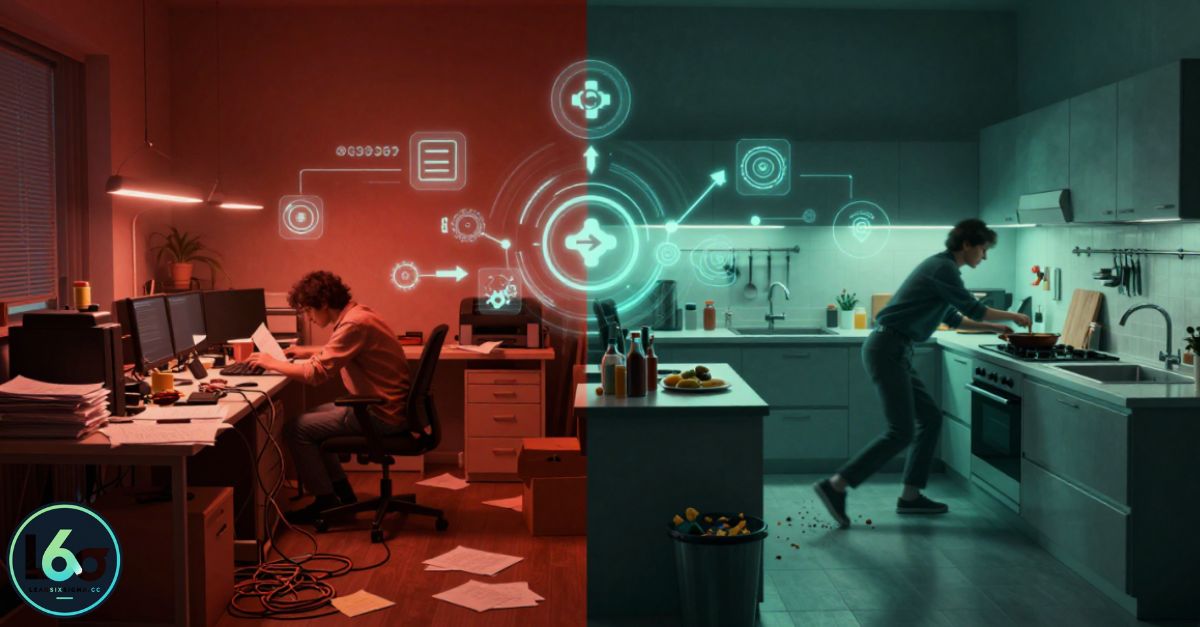
Next time you cook dinner, pay attention to what you're doing. Not the recipe. The movement. Watch how you navigate the space. How you grab what you need without thinking about where it is. How the cutting board sits next to the sink, the spices sit next to the stove, and the trash can sits right where the scraps fall.
You probably didn't design it that way on purpose. But over time, through trial and repetition, your kitchen organized itself around how you actually use it.
Now walk into your office. Or open your laptop. Or think about how your team runs a typical project.
Suddenly things aren't so smooth, are they?
The Accidental Lean Workspace
Most home kitchens, without anyone realizing it, follow core Lean principles.
Tools are stored at the point of use. You don't keep your spatula in the bedroom. The knife is near the cutting board. The pot is near the stove. You've placed things where they make sense, based on where and when you use them. There's visual management everywhere. The fridge tells you what you have. The spice rack shows you what's available at a glance. You don't need to open a spreadsheet to check your inventory. You just look.
Flow is built into the layout. Most kitchens follow some version of the "work triangle" between the sink, stove, and refrigerator. The path between these three stations is short and unobstructed because that's where the work happens. You don't cross the house to wash a vegetable.
And waste is naturally minimized. You prep what you need, cook what you prep, and serve what you cook. When the process works, there's very little excess. Very little waiting. Very little searching.
Your kitchen (or imagine a restuarants), without a single training session or process document, runs like a Lean operation.
Now Compare That to Your Work Environment
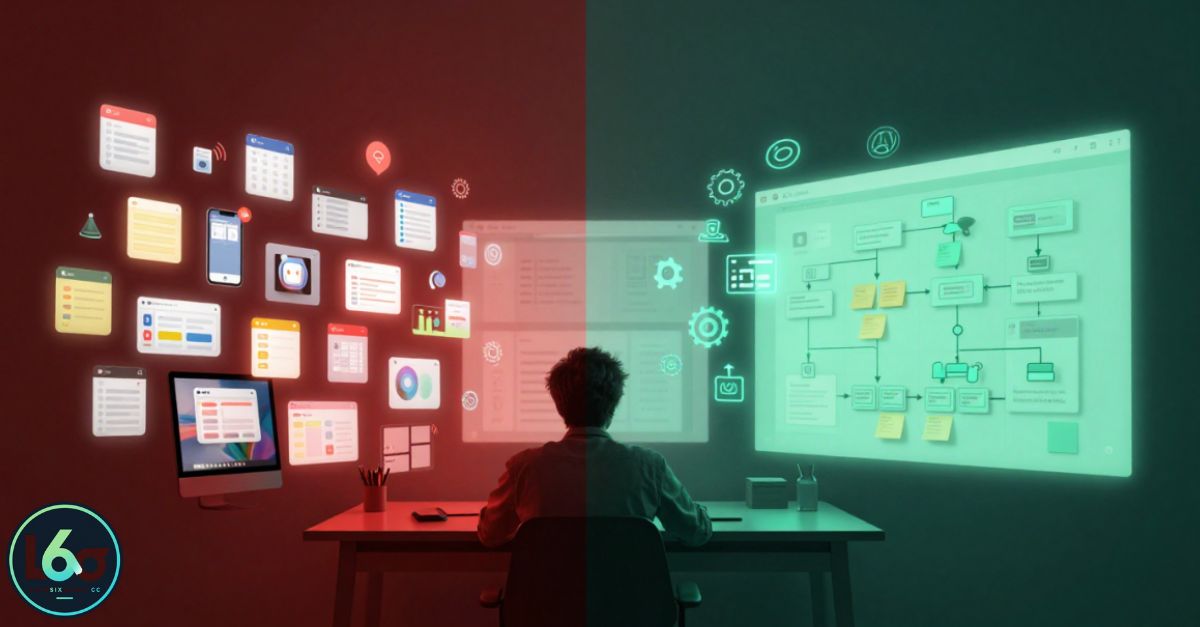
At most jobs, tools are scattered across platforms. The file you need is in a shared drive somewhere. Or maybe it was an email attachment. Or a Slack message from last week. You spend ten minutes searching before you can spend five minutes working.
There's no visual management. You can't glance at your workspace and know the status of everything. You have to dig through apps, check dashboards, scroll through threads. The information exists, but finding it takes effort every single time.
Flow is interrupted constantly. You're mid-task when a notification pulls you away. You need input from someone who's in a meeting until 15:00. The process doesn't move forward; it stutters, stalls, and restarts.
And waste is everywhere, hidden behind busyness. Rework because of unclear instructions. Overproduction of reports nobody reads. Motion between tools and platforms that adds zero value.
The contrast is striking once you see it.
What Your Office Can Steal From Your Kitchen
You don't need a Lean consultant to apply what your kitchen already knows. Put your most-used tools within reach. Digitally, that means pinning your core apps, bookmarking your daily links, and creating shortcuts for repeated tasks. If you access something five times a day, it shouldn't take five clicks to get to.
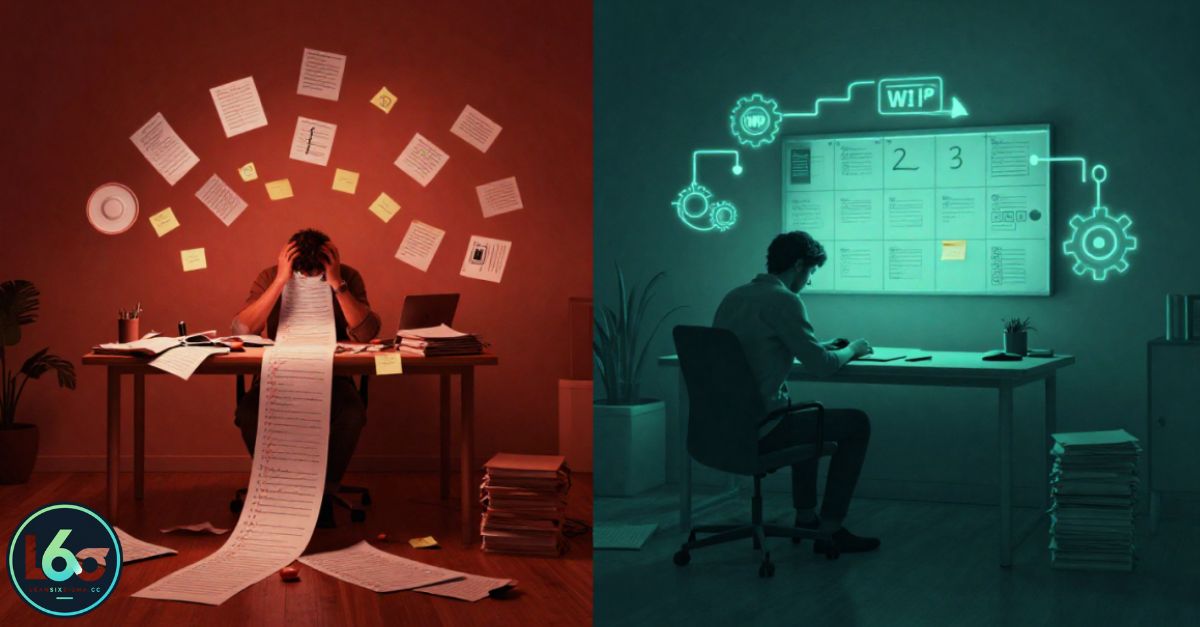
Create visual cues. A simple Kanban board, even a physical one with sticky notes, gives you the same at-a-glance status that your fridge gives you for groceries. What's to do, what's in progress, what's done. No searching required.
Minimize the distance between steps. If finishing task A always leads to starting task B, put them next to each other in your workflow. Reduce the handoffs, the logins, the platform switches. Every gap between steps is a place where momentum dies.
The kitchen doesn't overcomplicate things. It doesn't need a project management framework to make dinner. And most of the improvements your workday needs aren't complicated either. They're just about putting things where they belong and letting the work flow.
If you got a chuckle out of comparing your kitchen to your office, I'm glad. But seriously, take a look at your workspace this week with fresh eyes. See if the kitchen has lessons your desk hasn't learned yet. If this resonated, a like, share, or comment would mean a lot and helps it reach someone else who might need it.
Lean thinking, real life.